What Is Akedo? Understanding Ultimate Arcade Warriors Battle Action
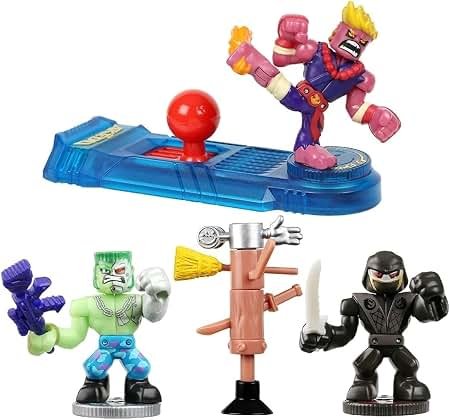
Akedo Ultimate Arcade Warriors is a collectible battle toy system that combines fast-paced physical action with split-strike mechanics, letting players smash opponents in head-to-head arena matches. Unlike traditional action figures that rely on accessories or electronics, Akedo warriors use a spring-loaded trigger mechanism housed in each figure’s base, delivering a single decisive strike that can break an opponent in half at the waist.
The line launched with a focus on arcade-inspired competition, offering dozens of unique warrior characters across multiple series, each with distinct designs, rarity tiers, and battle stats. We’ve seen collectors and kids alike drawn to the tactile satisfaction of the split mechanic and the tournament-style play that emerges when you pit two warriors against each other in purpose-built battle arenas.
How the Split-Strike Battle System Works
Every Akedo warrior figure consists of two halves — an upper torso and a lower base — connected by a magnetic waist joint that holds firm during display but separates cleanly when struck with enough force. The base houses a spring-loaded slam mechanism: players cock the trigger by pressing down on the figure’s head, building tension in the internal spring, then release it by letting go, sending the warrior’s fist forward in a rapid strike.
When two warriors face off, both players prime their figures and release simultaneously, aiming to land a hit on the opponent’s torso hard enough to break the magnetic connection and split the figure in two. The first warrior to separate their opponent’s halves wins the round. Action figure collectors appreciate that the split mechanic is fully reversible — snapping the halves back together takes a second, so the same warriors can battle repeatedly without permanent damage.
Timing and angle matter more than raw force; a glancing blow often fails to trigger the split, while a direct center strike almost always does. That subtlety keeps matches competitive even when rarity or stats differ between the two fighters.
Warrior Characters, Series, and Rarity Tiers
Akedo releases warriors in numbered series waves, each introducing 12 to 16 new characters with unique sculpts, color schemes, and backstory themes ranging from elemental ninjas to armored gladiators to cybernetic brawlers. Each warrior is assigned a rarity tier — common, rare, ultra-rare, or legendary — with higher tiers featuring metallic paint finishes, translucent plastic elements, or glow-in-the-dark details that distinguish them visually during play.
Rarity doesn’t strictly dictate battle performance; a common warrior can still defeat a legendary one if the player’s timing is sharper. That design choice keeps the battle arena ecosystem balanced, so newer collectors aren’t locked out of competitive play by veterans with full legendary rosters. Series packaging uses blind-box distribution, meaning you won’t know which warrior you’ve pulled until you open the pack, though each box lists odds for each rarity tier on the back panel.
Some series introduce sub-themes or team affiliations, grouping warriors by shared design motifs or elemental powers. These thematic clusters don’t affect gameplay rules but give collectors natural organizing principles when building display shelves or tournament rosters.
Battle Arenas and Tournament Play Formats
While you can battle Akedo warriors on any flat surface, the dedicated battle arena accessories provide raised platforms, boundary edges, and ring-out zones that add strategic depth. Official arenas feature a circular center platform with guardrails; if a warrior gets knocked outside the ring during a strike exchange, that counts as an automatic loss even if the figure didn’t split.
Tournament formats vary by group, but the most common structure is single-elimination bracket play where each match is best-of-three rounds. Players select their warrior before each round — some tournaments allow re-selection between rounds, while stricter formats lock you into one warrior for the entire match. Ring-out rules, strike timing windows, and whether players can adjust their warrior’s stance between strikes are all variables that local play communities settle on their own.
For casual play, many kids prefer continuous free-for-all battles where the goal is simply to rack up the most splits in a set time period. The low setup friction — no app, no batteries, no assembly — means a match can start within seconds of pulling two warriors out of a bag, which keeps momentum high during after-school sessions or birthday parties.

What Makes Akedo Different from Other Battle Toy Lines
Akedo’s core distinction is the permanence and simplicity of its strike mechanic. There’s no spinning top to maintain, no trading card game to learn, no screen to watch — just two figures, two players, and a single decisive moment when both triggers release. That immediacy appeals to collectors who want the satisfaction of physical competition without the overhead of rule books or accessory ecosystems.
The split mechanic itself is also reversible and repeatable in a way that destructive battle toys like breakable action figures from other lines are not. You’re not chipping paint, snapping limbs, or wearing down joints; the magnetic waist connection resets cleanly every time, so even heavily battled warriors retain their original structural integrity. This durability extends the playable lifespan of each figure and keeps the secondary market active, since collectors know a used warrior isn’t mechanically compromised by prior battles.
Another differentiator is the self-contained nature of each figure. You don’t need to learn complex combos or upgrade paths — every Akedo warrior functions identically at the mechanical level, so skill and timing are the only variables that separate beginner from advanced play. That flat learning curve makes the system accessible to younger kids while still rewarding the reflexes and spatial judgment that older players bring to tournament brackets.
Why Akedo Resonates with Competitive Collectors
Akedo Ultimate Arcade Warriors succeeds by stripping battle toys down to their most satisfying core — a single decisive strike, a clean split, and instant reset for the next round. The mechanical simplicity removes barriers to entry while the skill ceiling stays high enough to reward practice and precision. For collectors, the blend of chase-worthy rarity tiers, cross-series compatibility, and durable repeatability creates a system that holds value and engagement long after the first unboxing.
Whether you’re building a display shelf of legendary pulls or running weekend tournaments with friends, Akedo delivers the tactile feedback and competitive tension that made arcade games memorable in the first place. The split-strike mechanic isn’t a gimmick that wears thin — it’s the entire point, refined until every battle feels consequent and every reassembly resets the stakes cleanly. If you’re comparing collectible battle systems, the question comes down to whether you value electronic complexity or physical immediacy; Akedo stakes its claim squarely on the latter.
Notes
No, every Akedo warrior is fully mechanical. The spring-loaded strike mechanism is primed manually by pressing the figure’s head down, and releasing it triggers the strike. There are no batteries, apps, or electronic components involved.
This purely physical design means warriors never run out of power mid-battle and won’t stop working if left unused for months. It also keeps replacement costs low since there’s no circuitry to fail.
Yes, splitting is the intended outcome of every battle, and reassembly is instant. The upper torso and lower base reconnect via a magnetic waist joint — you simply align the two halves and press them together until the magnets engage.
The connection is strong enough to hold during normal handling and display but designed to separate cleanly when struck. There’s no wear or degradation from repeated splits, so the same warrior can battle hundreds of times without losing functionality.
Rarity affects visual design and collectibility but doesn’t give a warrior a mechanical advantage in battle. Every figure uses the same spring-loaded strike system and magnetic waist joint, so a common warrior has the same potential to win as a legendary one.
Victory depends on player timing, strike angle, and positioning rather than the figure’s rarity tier. This balance ensures that newer collectors can compete against veterans without needing to chase down ultra-rare pulls first.
Most Akedo series waves introduce 12 to 16 unique warrior characters, each with its own sculpt, color scheme, and rarity designation. Series are numbered sequentially, and each wave typically includes a mix of common, rare, ultra-rare, and legendary figures.
Blind-box packaging means you won’t know which warrior you’re getting until you open it, though the back of each box lists the odds for pulling each rarity tier. Some retailers also offer multi-packs or starter sets that guarantee specific warriors or rarity distributions.
Yes, all Akedo warriors are cross-compatible regardless of which series they came from. The strike mechanism, waist joint, and physical dimensions are standardized across every release, so a warrior from Series 1 can battle against one from Series 5 without any modification.
This open compatibility lets collectors mix and match their rosters freely and ensures that older series figures remain relevant as new waves launch. Tournament organizers also don’t need to enforce series-specific brackets unless they choose to for thematic reasons.
The manufacturer recommends Akedo for ages 6 and up, given the small parts and the manual dexterity required to prime and release the strike mechanism. Younger kids can handle the basic split-and-reassemble loop easily, while older players and adult collectors engage with tournament strategy and rarity chasing.
The system’s lack of complex rules or electronic setup makes it accessible across a wide age span. Parents appreciate that battles are quick and mess-free, and collectors value the displayability of the figures when not actively battling.